
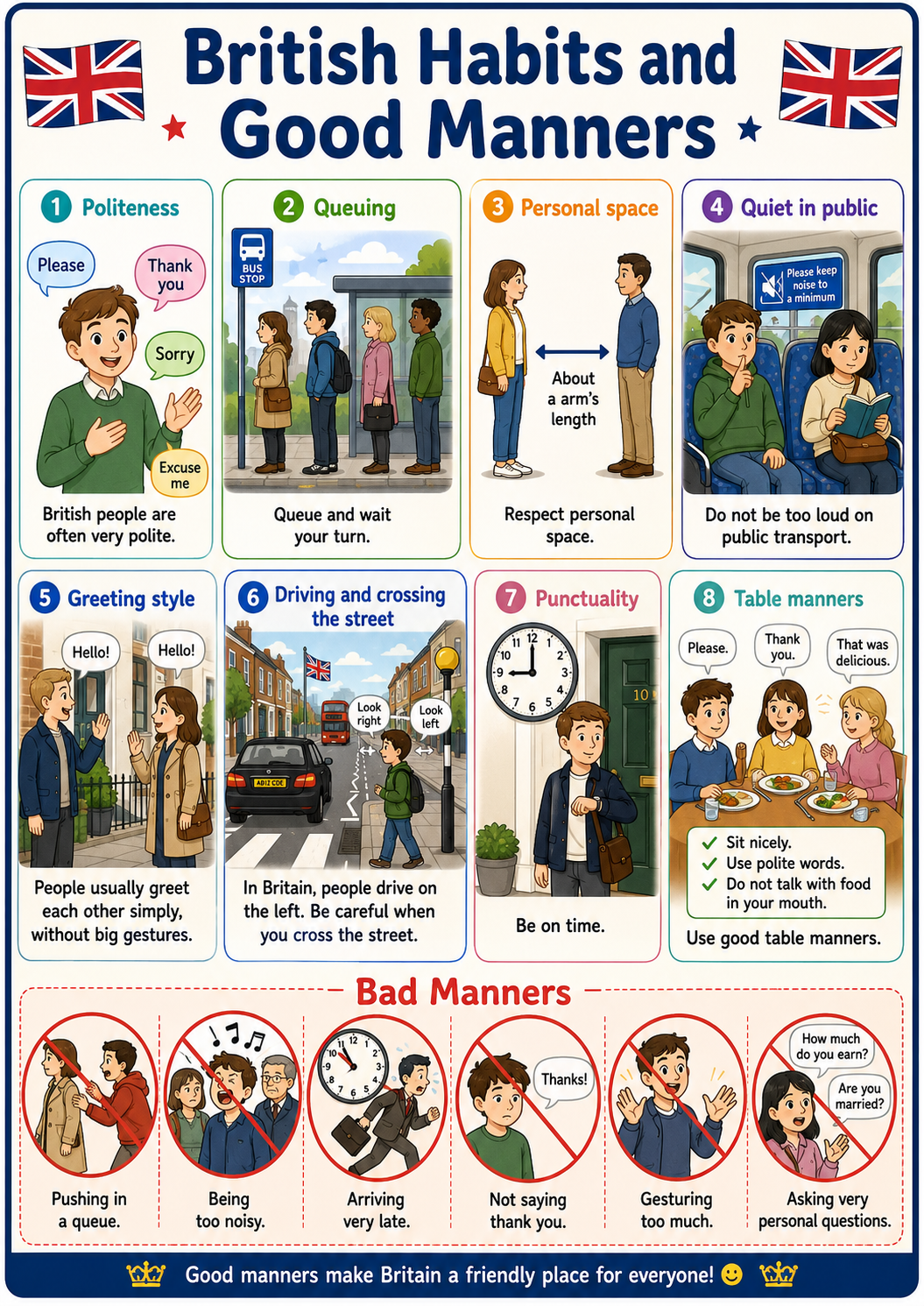
People in Britain are often very polite. They usually say “please”, “thank you”, and “sorry” many times during the day. For example, if someone wants to ask for information, they often start with “Excuse me”. Saying sorry is very common, even when the person has not done anything very wrong.
Another important habit in Britain is queuing. British people like waiting in line in shops, at bus stops, and in public places. It is considered very rude to push in or go before other people.
British people also respect personal space. They usually do not stand too close to others when they talk. They often speak in a quiet voice, especially on public transport. Talking very loudly on a bus or train is usually seen as bad manners.
In Britain, people usually greet each other in a simple way. They often say “Hello”, “Hi”, or “Good morning”, but they do not usually gesture a lot when they greet someone. In Italy, people often use their hands when they speak or say hello, but in Britain too many gestures can sometimes be considered impolite or unusual.
Another difference is driving. In Britain, people drive on the left side of the road, so it is different from Italy. For this reason, tourists must be very careful, especially when they cross the street. They should always look both ways before crossing.
In Britain, punctuality is important. If you have an appointment or you meet a friend, it is better to arrive on time. Being very late without saying anything is considered impolite.
At the table, British people usually use “please” and “thank you” when they ask for food or drink. It is not polite to speak with your mouth full. It is also better not to put your elbows on the table during a meal.
Some things are considered negative in Britain: pushing in a queue, being too noisy in public places, arriving very late, not saying thank you, gesturing too much, and asking very personal questions to people you do not know well. British people usually prefer polite and respectful behaviour.
True or False?
Tick the correct box.
- British people often say “please”, “thank you”, and “sorry”.
☐ True ☐ False - In Britain, pushing in a queue is considered polite.
☐ True ☐ False - British people usually like standing very close to others when they talk.
☐ True ☐ False - Talking loudly on public transport is often seen as bad manners.
☐ True ☐ False - In Britain, people drive on the left side of the road.
☐ True ☐ False - British people usually greet others with many hand gestures.
☐ True ☐ False
Open Questions
- What polite words do British people often use?
- Why is queuing important in Britain?
- What should people avoid doing on public transport?
- Why must tourists be careful when they cross the street in Britain?
- Write two things that are considered bad manners in Britain.
Answers
True or False?
- British people often say “please”, “thank you”, and “sorry”.
True - In Britain, pushing in a queue is considered polite.
False - British people usually like standing very close to others when they talk.
False - Talking loudly on public transport is often seen as bad manners.
True - In Britain, people drive on the left side of the road.
True - British people usually greet others with many hand gestures.
False
Open Questions — Suggested Answers
- What polite words do British people often use?
They often use “please”, “thank you”, “sorry”, and “excuse me”. - Why is queuing important in Britain?
Because British people think it is polite to wait their turn. - What should people avoid doing on public transport?
People should avoid talking very loudly. - Why must tourists be careful when they cross the street in Britain?
Because in Britain people drive on the left side of the road. - Write two things that are considered bad manners in Britain.
Pushing in a queue and being too noisy are considered bad manners.
- British people often say “please”, “thank you”, and “sorry”.